The Circus That Arrives —
and Disappears

For centuries, the traveling circus was one of the world’s original adventures: a caravan of performers, animals, and equipment moving from town to town, turning a quiet field into a spectacle for one night — and then vanishing before dawn.

Daily Venture is an informational site dedicated to the life of the traveling circus: the daily routines of performers on the road, the fleeting fairground towns they built and dismantled, and the adventures of trainers and artists touring across different eras. No ads, no sales — just history, one stop at a time.

Life on the Road: The Daily Routine of a Traveling Troupe

A Home That Moves Every Day

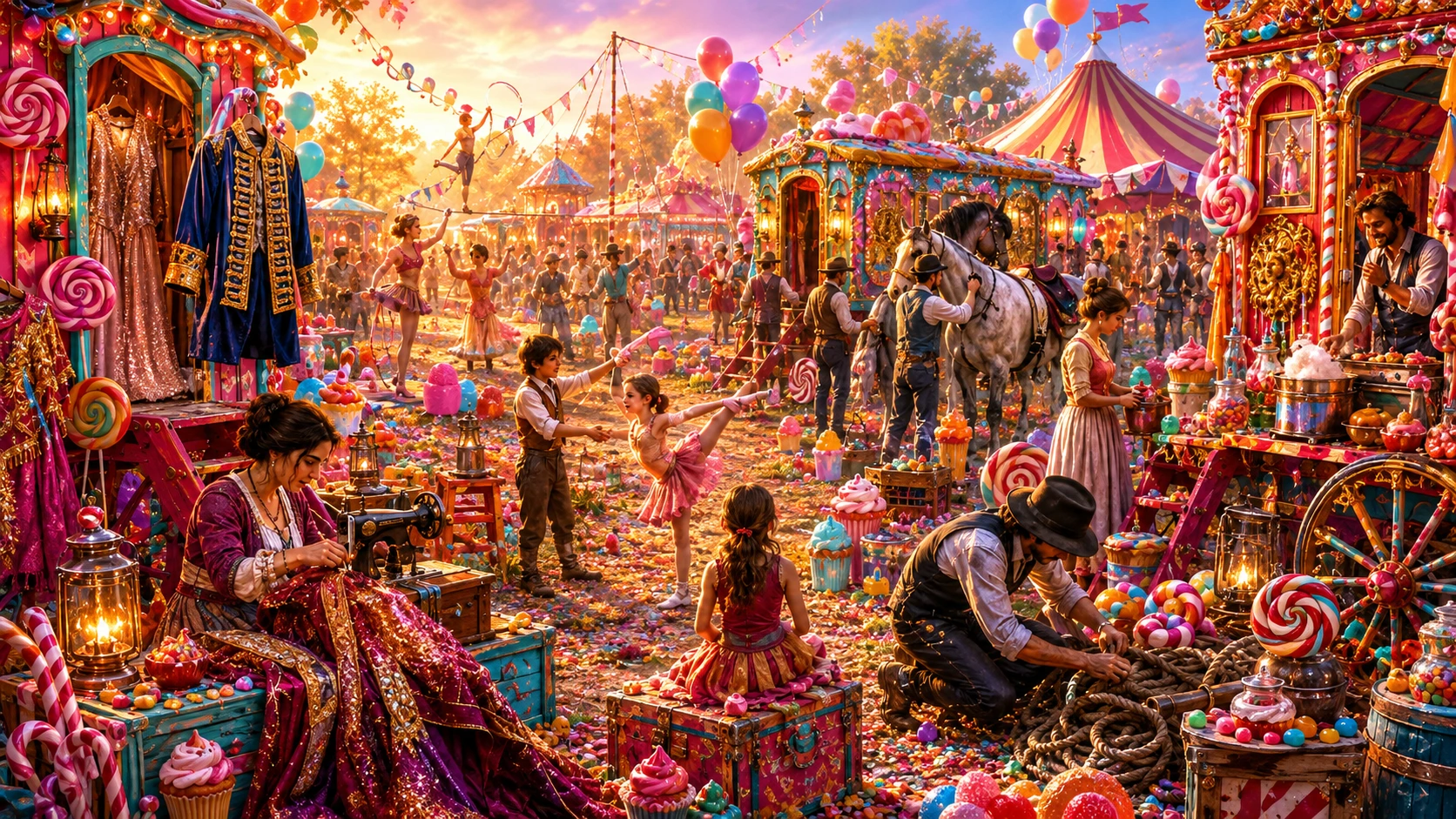
Life in a traveling circus was defined by constant motion. A troupe typically included performers, animal handlers, riggers, cooks, and support staff — all living, working, and traveling together, often for months at a time.

Each new location meant repeating the same demanding cycle: arriving at dawn, unloading wagons or trucks, raising the tent, setting up seating and equipment, rehearsing, performing, and then packing everything away again before moving to the next town. Families often grew up entirely within this rhythm, with children learning circus skills alongside basic schooling conducted on the road.

Despite the exhausting pace, traveling troupes developed a strong internal culture — closer to an extended family than a workplace, shaped by shared hardship, tight schedules, and mutual dependence in physically demanding, sometimes dangerous work.
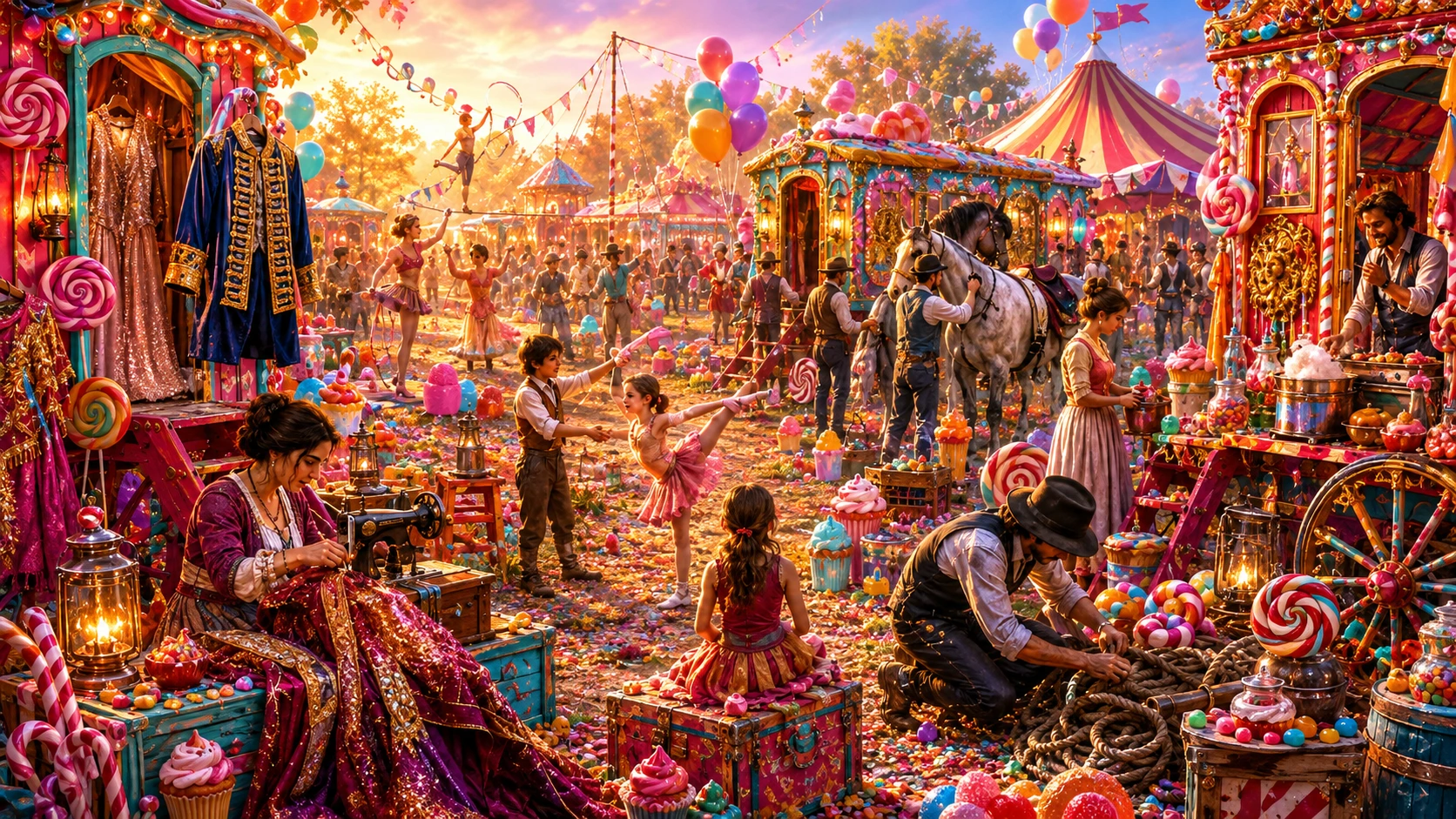
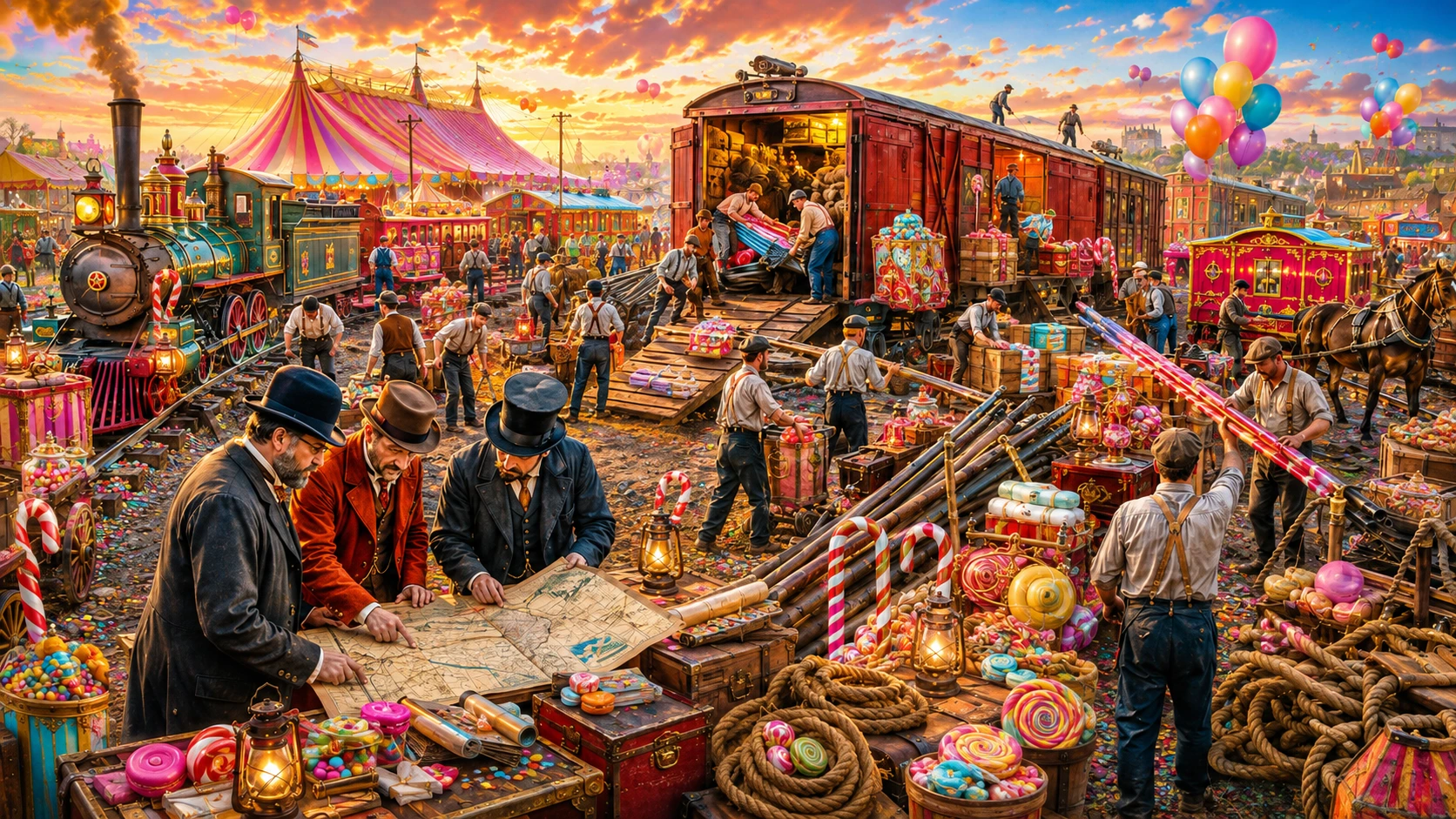
Traveling circus fairground

One-Night Towns: Fairground Cities That Vanish

A Town Built for a Single Evening

One of the most striking aspects of the traveling circus was its temporary architecture. Within hours, an empty field or town square could transform into a fully functioning entertainment venue — complete with a main tent, ticket booths, food stalls, and seating for thousands.

These improvised “one-night towns” followed a well-rehearsed logistics pattern: advance teams would arrive days ahead to negotiate land use, put up promotional posters, and prepare the site, while the main company followed by rail or road. Once the show ended and the final performance wrapped, the entire structure could be disassembled and loaded for departure within a single night.

This constant cycle of appearance and disappearance gave the circus an almost mythical quality in the towns it visited — a fleeting spectacle that left behind only memories, posters, and stories passed down for years.

Circus trainers and performers

Trainers and Performers on Tour

Adventures Across Continents and Eras

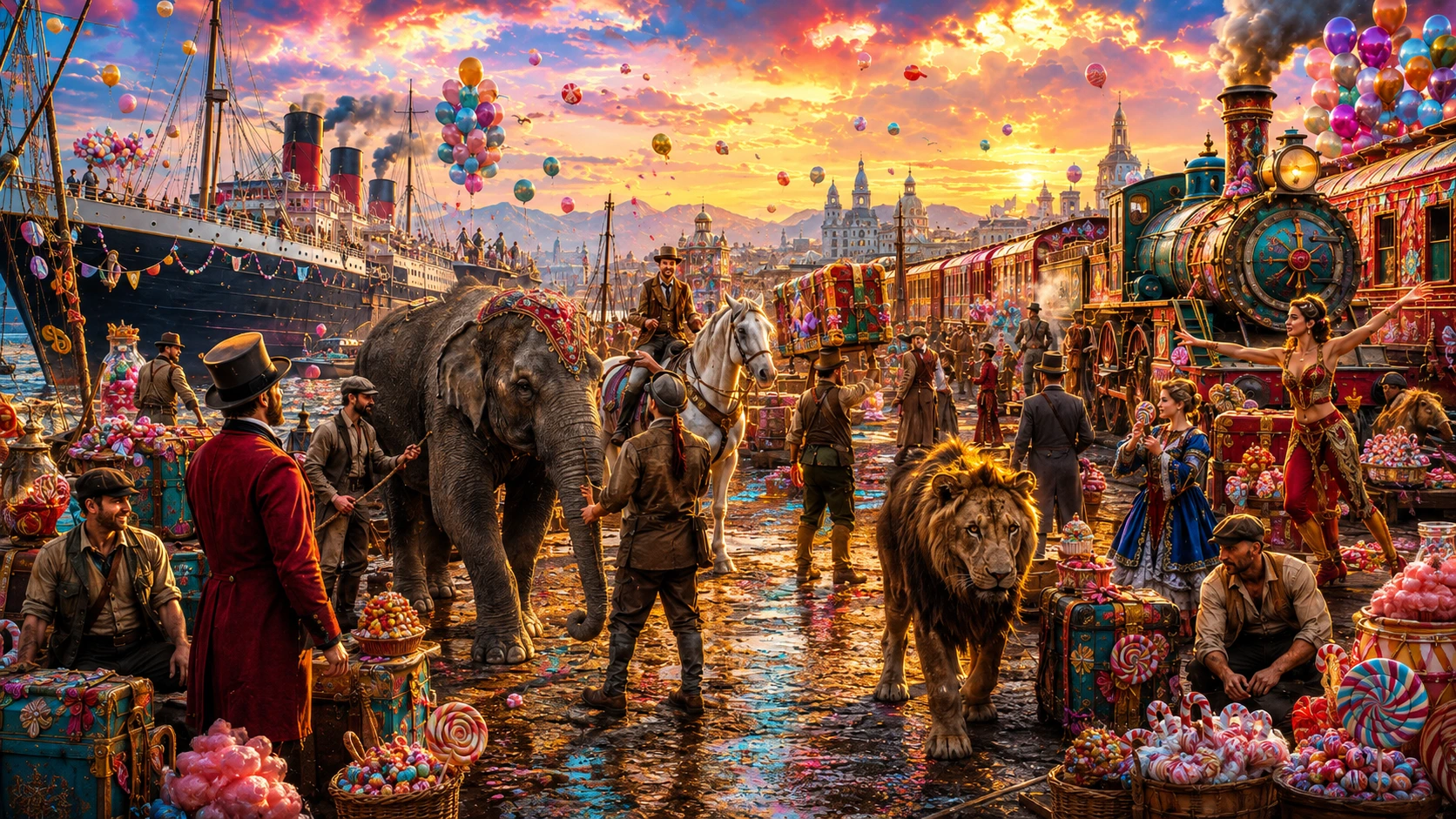
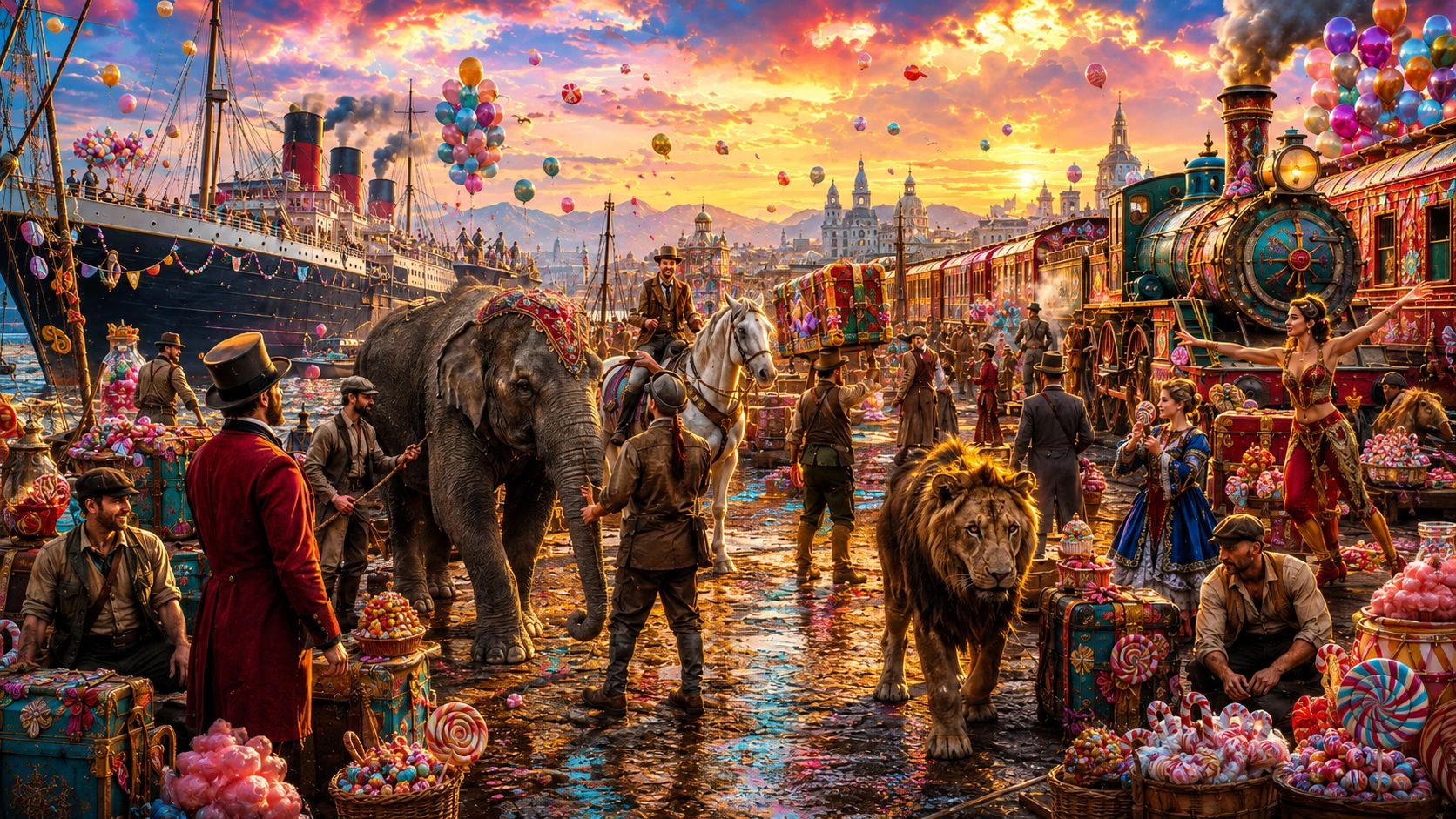
Touring exposed circus performers and animal trainers to an extraordinary range of environments, climates, and challenges — from crossing oceans by ship to navigating unfamiliar roads and regulations in foreign countries.

Animal trainers, in particular, faced the added complexity of caring for exotic animals far from their natural habitats, managing feeding, health, and safety under constantly changing conditions. Meanwhile, acrobats, aerialists, and other performers had to adapt their acts to venues of wildly different sizes and configurations, from grand permanent arenas to makeshift outdoor stages.

Across different eras — from 19th-century rail-based touring circuses to 20th-century international tours — the core challenge remained the same: delivering a consistent, polished spectacle despite the unpredictability of life on the move.

The Logistics Behind the Spectacle

An Adventure Built on Precision

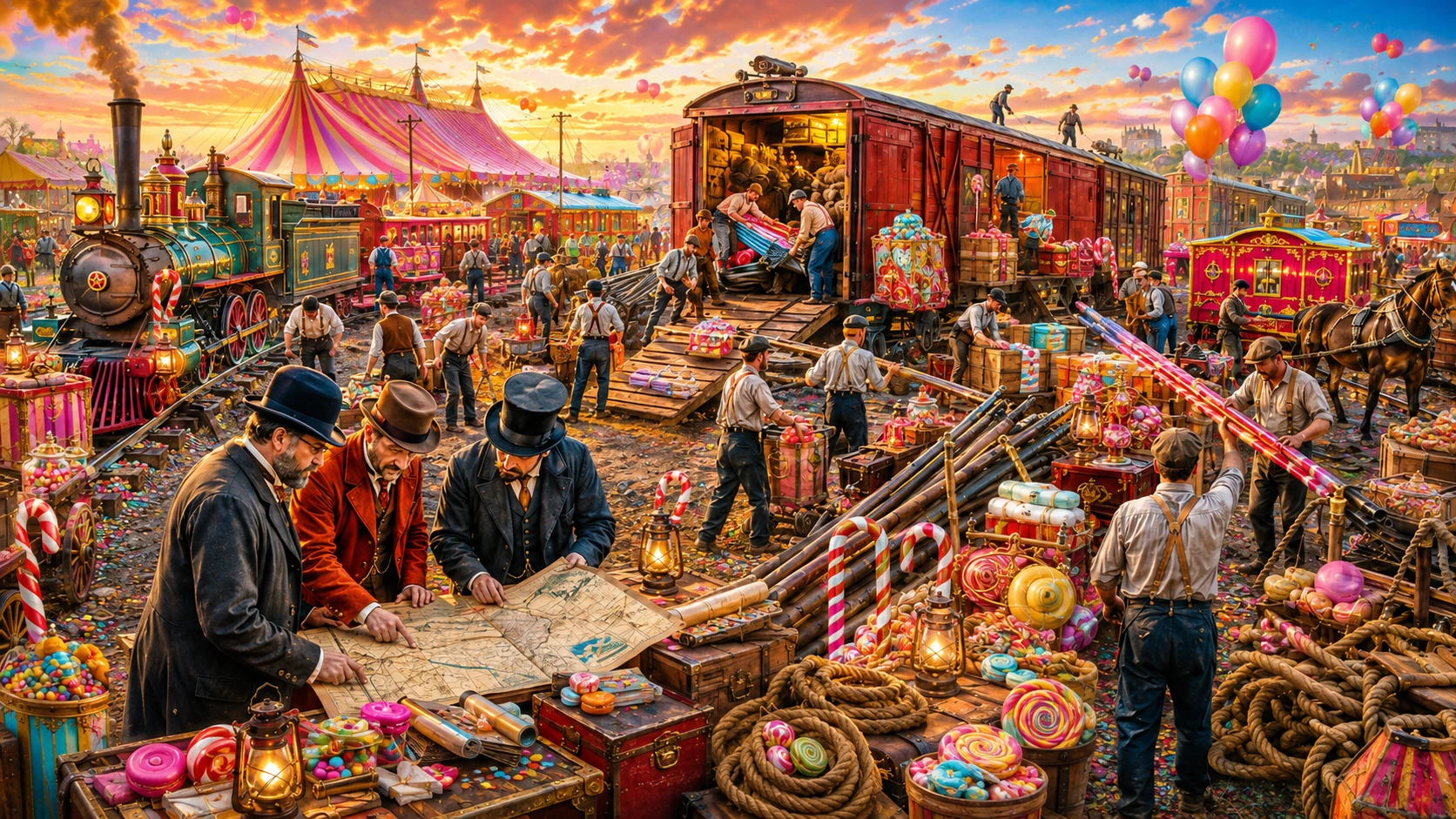
Behind every seemingly effortless performance was an intricate logistical operation. Traveling circuses relied on detailed scheduling, dedicated transport crews, and careful route planning to move enormous quantities of equipment, animals, and people efficiently.

Railways played a transformative role in circus history, allowing far larger productions to tour far greater distances than horse-drawn wagons ever could. Custom rail cars were designed to transport tents, wagons, and animals, turning circus logistics into one of the most complex traveling operations of its time.

This behind-the-scenes precision is often overlooked by audiences, who saw only the finished performance — unaware of the days of planning, negotiation, and physical labor required to bring the show to their town.

Community and Hierarchy Within the Traveling Circus

A Society of Its Own

Traveling circuses developed their own internal social structures, distinct from the towns they passed through. Roles were often clearly defined — from star performers to support crews — and status within the community was shaped by skill, seniority, and reputation rather than outside social standing.

This self-contained community had its own customs, slang, and traditions, many of which were passed down through generations of circus families. For outsiders who joined a traveling troupe, becoming part of this community meant adapting not just to the physical demands of circus life, but to an entirely distinct social world.

The insular nature of this community contributed to the circus’s mystique — a group of people who seemed to exist slightly outside ordinary society, appearing and vanishing along with their tents.

The Decline and Legacy of the Traveling Circus

From the Road to Memory

The golden age of the large traveling circus began to fade in the mid-20th century, as television, changing entertainment habits, rising operational costs, and evolving attitudes toward animal welfare reshaped the industry. Many touring circuses scaled down, changed formats, or closed entirely.

Yet the legacy of the traveling circus persists — in circus schools that preserve traditional skills, in contemporary circus companies that reinvent the art form without touring menageries, and in the enduring cultural imagery of the big top, the ringmaster, and the fairground that appears and disappears overnight.

The adventure of the traveling circus may have changed shape, but its core idea — bringing spectacle directly to people, town by town — continues to influence live entertainment today.

Sources & Further Reading

Where This Information Comes From

The content on this site is based on well-documented historical accounts of circus history and touring entertainment. For deeper reading, we recommend exploring:

Historical studies on the development of the traveling circus in Europe and North America

Accounts of railway-based circus logistics in the 19th and 20th centuries

Social histories of circus communities and performer traditions

Documentation on the transition from traveling circuses to modern circus arts

Daily Venture does not claim academic completeness — it’s meant as a starting point for anyone curious about the adventure behind the big top.

FAQ

Early circuses relied on horse-drawn wagons, while later circuses used specially designed railway cars, and eventually trucks, to move tents, equipment, and animals efficiently across long distances.

Most traveling circuses stayed for a single day or evening — a single performance or a short series of shows — before packing up and moving to the next location, giving rise to the term “one-night town.”

Many circus families spent the majority of the year traveling together, with children often growing up within the touring community and learning circus skills from an early age.

No. Daily Venture is a purely informational resource. We do not sell products, services, or tickets, and we do not display advertising.